Sonatha: The Graceful Script Font for Elegant Design
There are moments in design when you need a typeface that speaks softly but leaves a lasting impression. You're not looking for something loud or overly decorative. Instead, you want a font that carries a sense of refinement, a touch of personal warmth, and an undeniable sophistication. This is where Sonatha enters the conversation. As a graceful and delicate script font, Sonatha offers designers, entrepreneurs, and creatives a tool that bridges the gap between formal elegance and approachable charm.
Understanding Sonatha's Visual Character
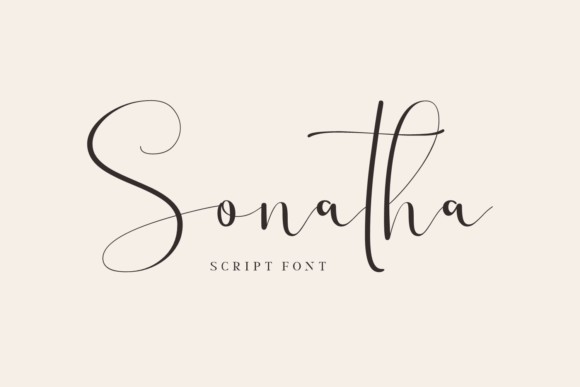
Sonatha is best described as a thin, gorgeous typeface. Its letterforms are characterized by flowing, connected strokes that mimic the fluidity of hand-lettering, yet they maintain a consistent and polished structure. This isn't a rough, casual handwritten font; it's a refined script font designed for clarity and beauty. The strokes are light and airy, giving text set in Sonatha a sense of delicacy and grace. The overall personality is one of understated luxury—it feels personal, crafted, and intentional.
What sets Sonatha apart from many other script typefaces is its balance. It avoids being overly swashy or ornate, which can sometimes sacrifice readability. Instead, it offers elegant connections and subtle flourishes that enhance its aesthetic without overwhelming the message. This makes it a versatile display font suitable for both prominent headlines and smaller accent text, provided the context is right.
Where Sonatha Truly Shines: Practical Applications
The real value of a premium font like Sonatha is measured by how effectively it can be deployed across various projects. Its strengths lie in applications where a personal, elegant, and high-end feel is desired.
Branding and Logo Design: For businesses in the wedding industry, boutique retail, high-end cosmetics, artisanal food, or luxury services, Sonatha can be a cornerstone of brand identity. Imagine it used for a wedding planner's logo, a bakery's signage, or the wordmark for a handmade jewelry brand. It immediately communicates quality, care, and a personal touch. When used as part of a font pairing, it works beautifully alongside a clean sans serif font or a classic serif font for body text, creating a harmonious hierarchy that feels both professional and inviting.
Print and Editorial Projects: The applications in print are extensive. Sonatha is an excellent choice for creating elegant invitations, from wedding suites to upscale event announcements. It adds a sophisticated flair to greeting cards, gift tags, and thank you notes. In editorial design, it can be used for chapter titles, pull quotes, or magazine mastheads to inject a sense of style and break up the monotony of standard text fonts.
Digital and Social Media: In the digital realm, Sonatha helps create social media graphics that stand out. Use it for Instagram quote graphics, Facebook event covers, or Pinterest pins to add a layer of visual interest and professionalism. It's also perfect for web design elements like hero section callouts, decorative subtitles, or promotional banners where you want to draw the eye with beautiful typography.
Packaging and Product Design: For packaging design, especially for artisanal, organic, or gift-oriented products, Sonatha can elevate the unboxing experience. It conveys a story of craftsmanship and attention to detail, making the product feel more special and valuable to the consumer.
Making the Most of Sonatha: A Designer's Guide
Adopting a new creative font into your workflow requires more than just liking its look. Here’s how to evaluate and use Sonatha effectively.
Evaluate the Project Fit: Ask yourself if the project's tone aligns with Sonatha's personality. It's ideal for themes of elegance, romance, celebration, luxury, and personal touch. It may not be the best fit for corporate reports, technical documentation, or contexts requiring a very strong, authoritative voice. Its thin strokes, while beautiful, are designed for impact at display sizes, not for setting long paragraphs of body copy.
Test Readability and Hierarchy: Always test Sonatha at the actual size it will be viewed. For a logo, ensure it remains legible when scaled down for a social media profile picture. For a poster, check that it's readable from a distance. Use it strategically for headlines, subheadings, or key phrases, and pair it with a highly readable sans serif or serif for longer text blocks. This creates a clear visual hierarchy that guides the viewer's eye.
Explore Its Full Potential: One of the key features of Sonatha is that it is PUA encoded. This is a practical advantage for anyone using design software. It means all the additional glyphs, swashes, and alternate characters are easily accessible through your system's character map or the glyphs panel in programs like Adobe Illustrator or InDesign. Don't settle for the default letters; explore these extras to add unique, handcrafted flourishes to your titles or monograms, making your work truly one-of-a-kind.
Understand the Licensing: As a commercial font, it's crucial to understand its licensing. Ensure the license covers your intended use, whether it's for a client's logo, products for sale, or digital templates. Proper licensing is a non-negotiable part of professional practice and protects both you and your client.
Integrating Sonatha into Your Creative Toolkit
Adding Sonatha to your library of design assets is about expanding your expressive range. It's a typeface that answers a specific need: when your design requires a voice that is soft, sophisticated, and intimately stylish. It’s not a font for every project, but for the right project, it can transform the entire aesthetic, lending it a quality of handmade elegance that resonates deeply with an audience. By understanding its characteristics and applying it thoughtfully, you can leverage Sonatha to create work that feels both personally crafted and professionally polished.