Kimberly: The Monoline Script for Modern Elegance
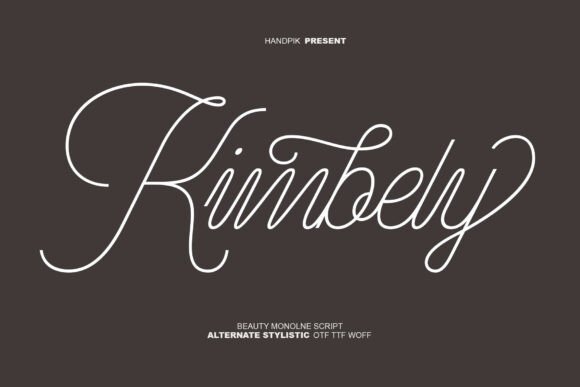
In the search for a typeface that balances fluid grace with a contemporary edge, designers often hit a wall. You want something that feels personal and handcrafted, but not messy. Sophisticated, but not stuffy. This is the precise space that the Kimberly font occupies. It is a premium monoline script, meaning every stroke maintains a consistent, unwavering thickness from start to finish. This simple technical choice creates a result that feels both clean and deeply expressive, making it a versatile asset for a wide range of creative work.
At its core, Kimberly is defined by its continuous, flowing lines. The letters connect in a seamless rhythm, creating a sense of movement and intentionality. Its character isn't found in sharp, angular forms or heavy, dramatic swashes. Instead, the personality comes from the subtle, graceful loops of the lowercase letters and the sweeping, confident curves that define its uppercase set. It’s a typeface that doesn’t shout for attention; it earns it through quiet sophistication. Think of the clean, confident line of a professional calligrapher’s pen—this is the essence Kimberly captures. It’s a modern typography solution for anyone needing a script font that feels both personal and polished.
Where Kimberly Truly Shines: Practical Applications
The real value of any design asset is measured by its utility. Kimberly’s balanced aesthetic makes it surprisingly adaptable. It’s not a one-trick pony for wedding invitations alone. For brand identity, it’s a powerful tool. Imagine it as the primary wordmark for a boutique skincare brand, a high-end bakery, or a personal stylist. It immediately communicates a sense of care, quality, and approachable luxury. Paired with a simple sans serif font for body copy, it creates a complete and professional visual language.
In editorial design, Kimberly excels in roles that require a touch of elegance without sacrificing clarity. Use it for pull quotes in a magazine layout, chapter titles in a book, or section headers in a blog post. Its strong legibility at display sizes ensures it commands attention on a page, while its script nature adds a human, curated feel. For packaging design, it can elevate a product’s perceived value, making a simple label look considered and premium. It works beautifully for artisan goods, specialty foods, or cosmetic products where shelf appeal is everything.
Digital creators will find it equally useful. A creative font like Kimberly can transform social media graphics, giving Instagram stories, Pinterest pins, and Facebook ads a cohesive and professional look. It’s perfect for blog headers, email newsletter banners, and website hero sections where you need to make an immediate emotional impact. For entrepreneurs and small business owners, using Kimberly in marketing materials—from business cards to posters and advertisements—can help build a recognizable and trustworthy brand presence that stands out in a crowded market.
A Designer’s Guide to Using This Typeface
Choosing the right font is about more than just liking how it looks. It’s about evaluating fit. Before you commit to Kimberly, consider the voice of your project. Its personality is elegant, modern, and slightly feminine, but not overly frilly. Ask yourself: does this align with my brand’s values? It’s an excellent choice for projects aiming for sophistication, creativity, or warmth. It might be less suitable for corporate finance reports or technical manuals, where a neutral serif font or sans serif font would be more appropriate.
One of the most critical steps is testing font pairing. Kimberly’s monoline structure gives it a clean enough skeleton to work well with a variety of other typefaces. For a timeless look, pair it with a classic, light-weight serif like Garamond or Lora. For a more modern and minimalist vibe, combine it with a geometric sans serif such as Montserrat or Poppins. The key is contrast in style, not in weight or era. Always test your pairings at the size they’ll be used to ensure the combination is harmonious and, most importantly, readable.
Practical considerations are part of the professional process. Review the included styles: Kimberly comes with Uppercase, Lowercase, Numeral, and Functional Multilingual characters, as well as Stylistic alternates. This means you have the tools to customize its look and ensure it supports the languages your audience uses. Always check the commercial license of any premium font before using it in client work or for commercial sale. The files provided—Opentype (Otf), TruType (Ttf), and Woff—cover all your needs for print design, desktop applications, and web design projects, ensuring seamless integration into your workflow.
Finally, think about readability in context. While Kimberly is a highly legible script font, it is a display typeface. Use it for headlines, logos, and short phrases. Avoid setting long paragraphs of body text in it, as this can strain the reader’s eye. Its strength is in creating visual hierarchy—drawing the eye to the most important message first. By using it strategically, you harness its elegance to guide your audience, improve engagement, and ultimately, make your designs more effective and memorable.